Use 'Flat200' to get INR 200 off on orders above 1999!
Use 'Gheepinni10' to get 10% off on orders above 1500!

Menu

Use 'Flat200' to get INR 200 off on orders above 1999!

Mini Cart

In an age of automation, handmade food has become rare. Efficiency has replaced patience. Uniformity has replaced character.

But some recipes lose their essence the moment they are rushed. Ghee pinni is one of them.

Roasting flour in ghee is not a passive step. It requires attention. The heat must stay controlled. The mixture must be stirred continuously. The color must deepen gradually without burning. The aroma shifts subtly as it cooks, and you learn to recognize the exact moment it is ready.

No machine can fully replicate that instinct.

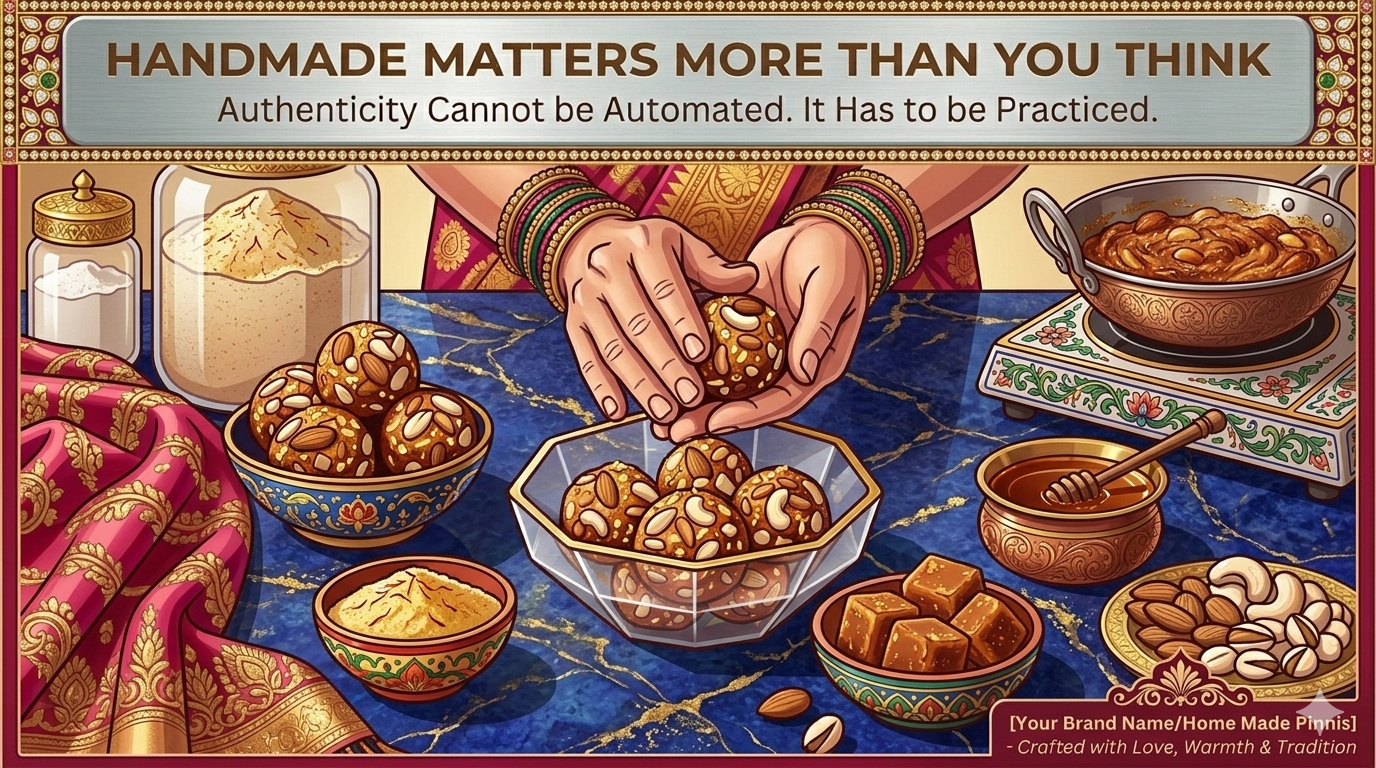
Shaping each pinni by hand also makes a difference. When you press and form it yourself, you can feel the texture. You can sense if the mixture needs a little more binding or if it has reached the perfect consistency. That tactile feedback ensures balance in every batch.

Handmade does not mean imperfect. It means intentional.

Slight variations in shape are not flaws. They are proof that real hands were involved. That someone checked the temperature, adjusted the sweetness, and ensured the texture felt right before it reached you.

Mass production prioritizes speed and volume. Handmade prioritizes care and control.

When you hold a handmade pinni, you are not holding a factory product. You are holding something that was monitored, shaped, and completed with patience. And you can taste that difference.

Authenticity cannot be automated. It has to be practiced.
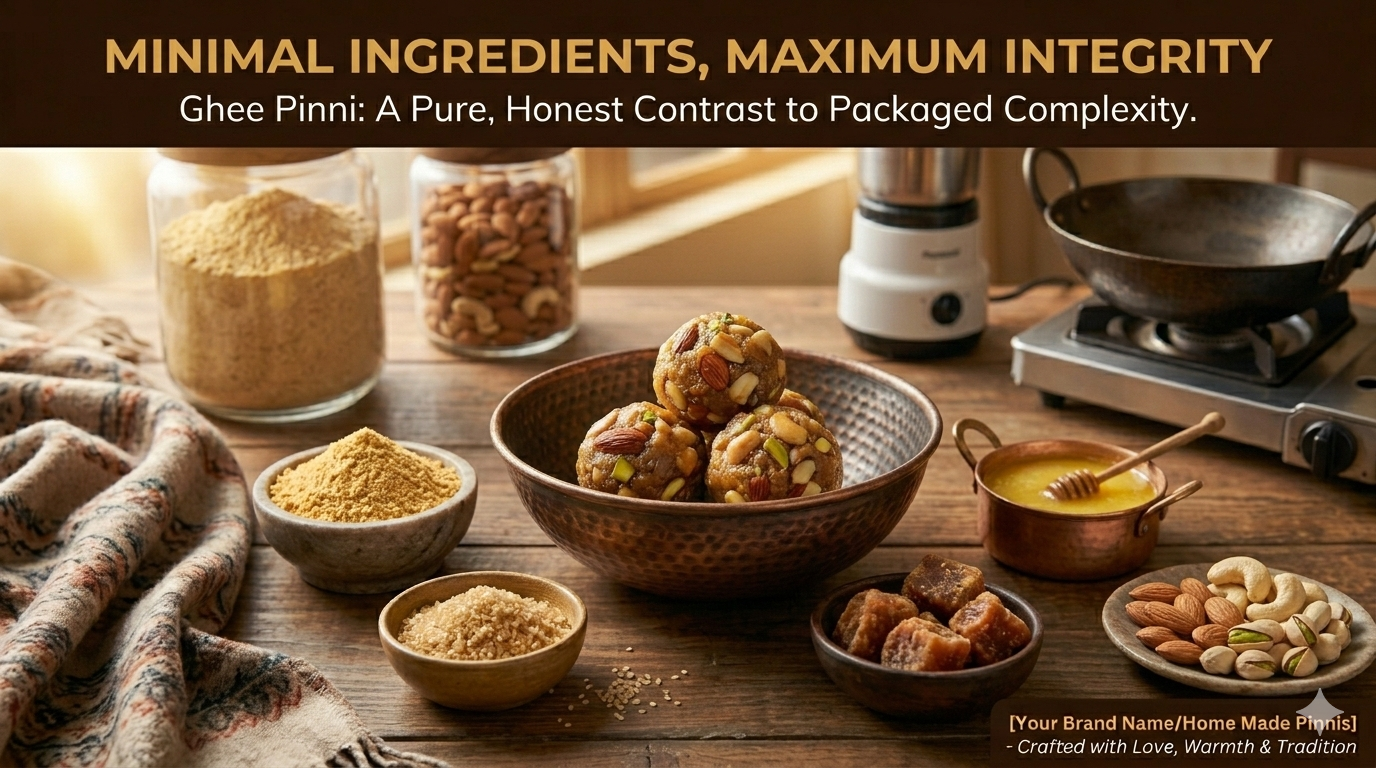
We live in a time where most packaged foods come with ingredient lists that are longer than the recipe itself. Preservatives, stabilizers, artificial flavors, enhancers. Somewhere in the middle of all that complexity, the soul of the food gets lost.

Ghee pinni stands in quiet contrast to that.

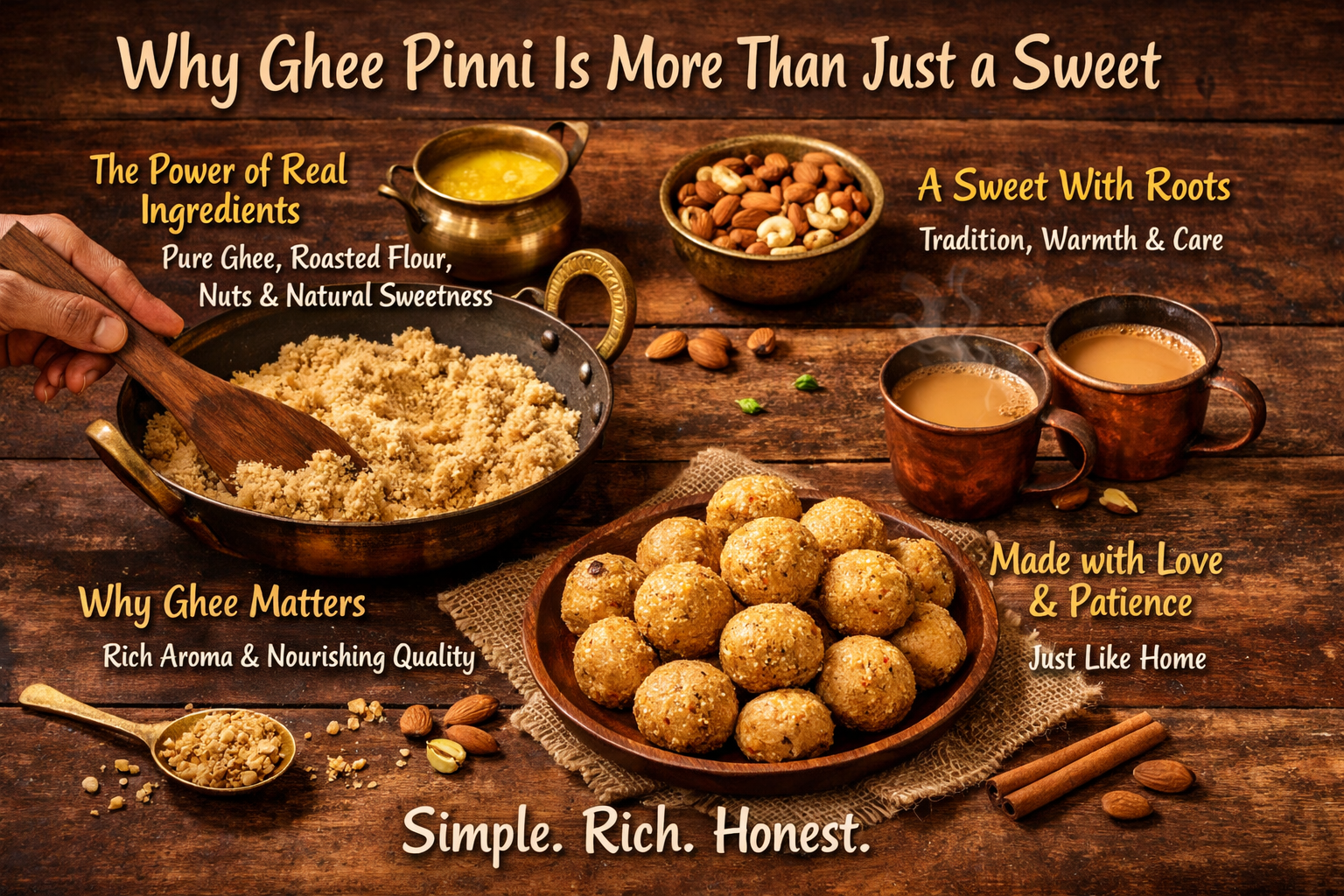
At its core, it needs only a handful of ingredients. Whole wheat flour. Pure desi ghee. Sugar or jaggery. Carefully selected dry fruits. That is all. There is no room for unnecessary additions because there is nowhere to hide.

When a recipe is this simple, integrity becomes everything.

If the ghee is not pure, you will taste it immediately. If the flour is stale, the aroma will never develop properly. If roasting is rushed, the texture will feel raw and heavy. Simplicity demands precision.

That is why sourcing matters deeply. The ghee must be aromatic, clean, and rich without being greasy. The flour must be fresh enough to release that nutty fragrance when roasted slowly. Dry fruits must be crisp, not rubbery or overly processed.

The balance of sweetness is equally important. Pinni is not meant to overwhelm. It is meant to feel nourishing. Too much sugar can flatten the depth of flavor created by slow roasting. The right amount enhances it without dominating.

There is something powerful about food that does not rely on excess. It reflects restraint, discipline, and confidence in the craft. Ghee pinni proves that you do not need complexity to create something indulgent. You need quality and intention.

In a world obsessed with more, pinni reminds us that sometimes less is stronger.

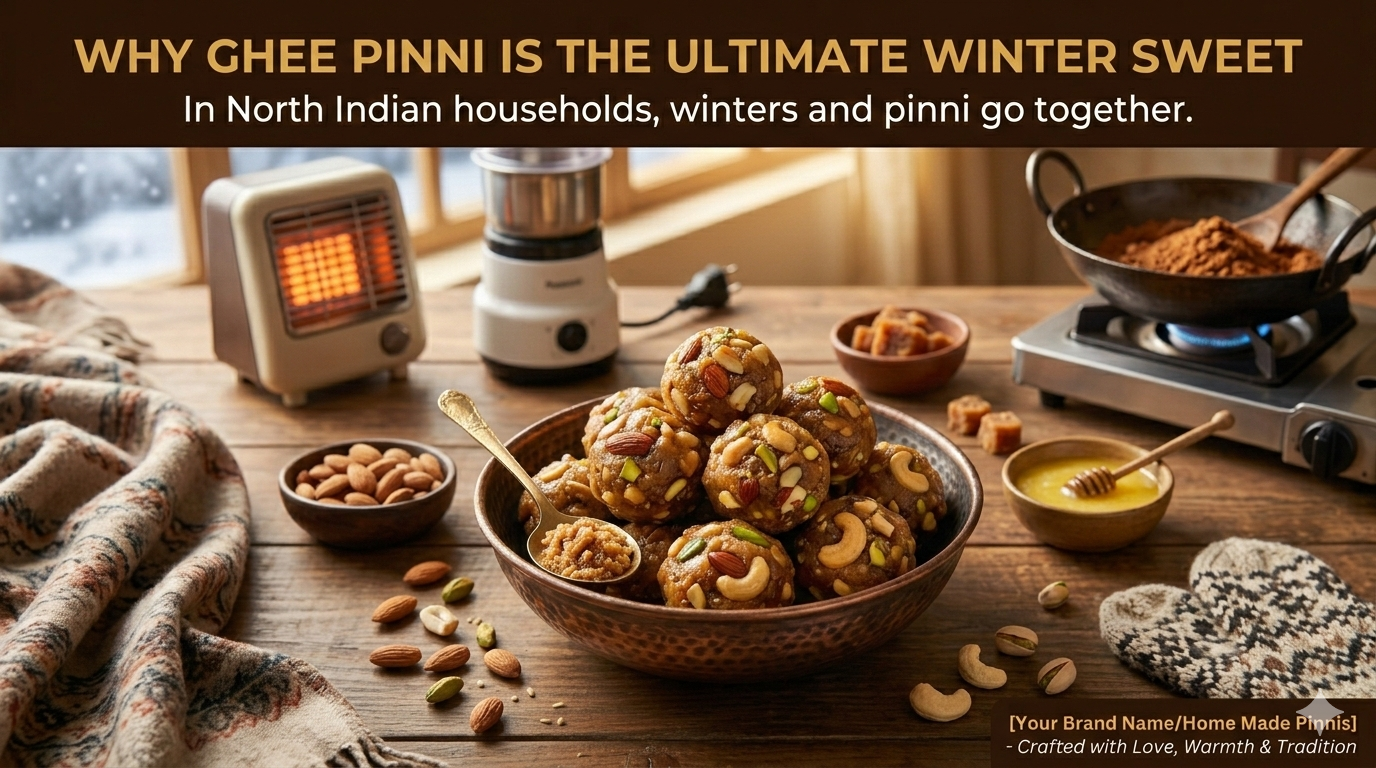
In North Indian households, winters and pinni go together.

Cold weather demands food that warms from within. Ghee pinni was traditionally made during peak winter months because it provides sustained energy. The richness of ghee supports warmth. Nuts add density. The slow-roasted flour gives strength.

Unlike syrup-based sweets, pinni is dry, compact, and travel-friendly. It stores well. It stays fresh longer. That is why families made large batches and shared them with relatives.

Even today, one small pinni with a glass of warm milk feels complete. It is filling without being excessive.

There is comfort in knowing that something so simple has stood the test of generations. Not because it was trendy, but because it worked.

Winter sweets come and go. Pinni remains.

Great ghee pinni is not rushed.

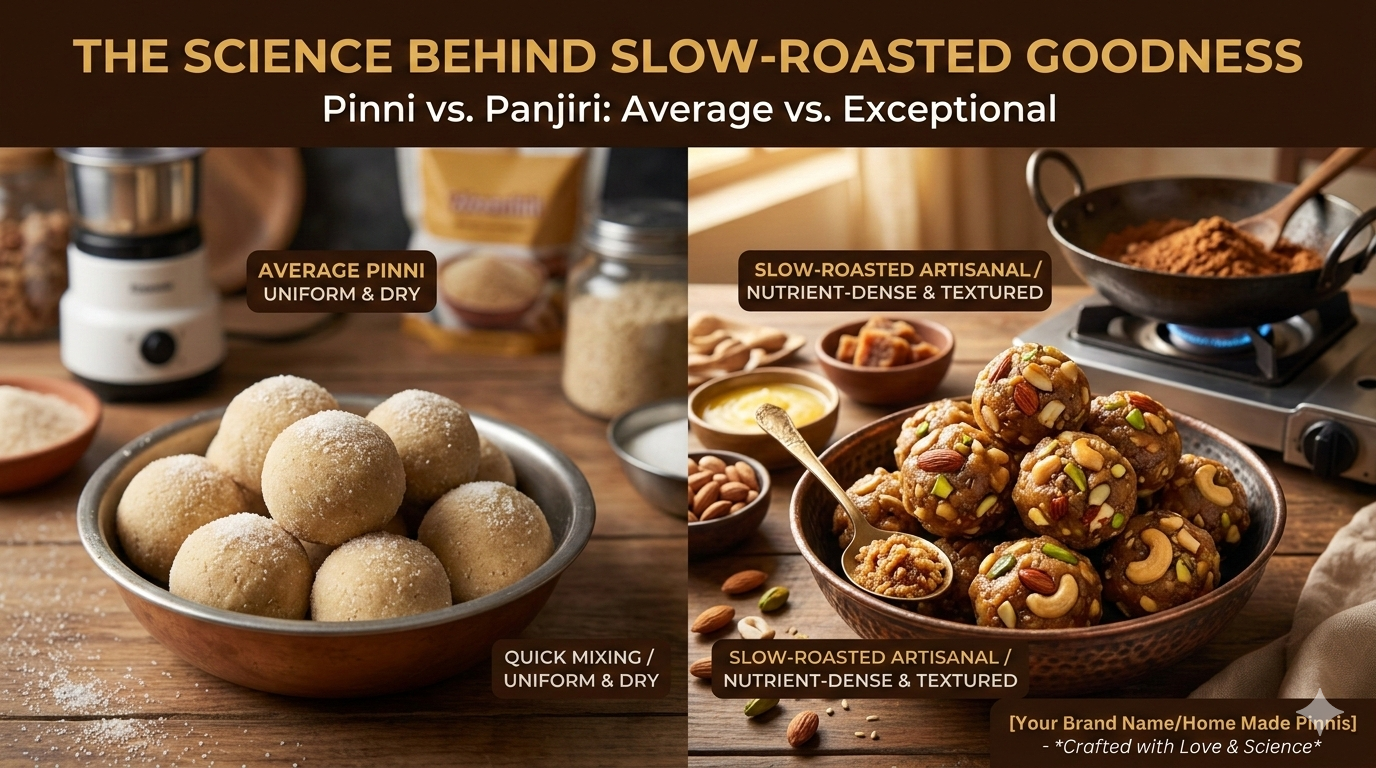
The difference between an average pinni and an exceptional one lies in roasting. When whole wheat flour is slow-roasted in pure desi ghee, a transformation happens. The raw taste disappears. The color deepens into a warm golden brown. The texture becomes nutty and aromatic.

This process is not decorative. It changes digestibility. Proper roasting reduces heaviness and enhances flavor complexity. The ghee coats each grain evenly, creating that melt-in-the-mouth texture that defines authentic pinni.

Dry fruits are not fillers either. Almonds add structure. Cashews lend richness. Gond, when used, adds body and traditional nourishment value. Everything has a purpose.

Modern sweets often rely on excess sugar for impact. Pinni does not. Its sweetness is balanced, allowing the roasted flour and ghee to lead.

When made with care, ghee pinni feels grounding rather than overwhelming. It satisfies without making you feel weighed down.

That balance is not accidental. It is technique, patience, and respect for the craft.

Some sweets are just desserts. Ghee pinni is not one of them.

For me, it has always meant warmth. The kind that starts in the kitchen and slowly fills the whole house. The aroma of atta roasting in pure desi ghee, the quiet patience it takes to stir it properly, and the excitement of shaping each pinni by hand. It is simple, but it never feels ordinary.

What makes ghee pinni special is honesty. There are no complicated ingredients. Just good quality flour, rich ghee, handpicked dry fruits, and the right amount of sweetness. When made correctly, every bite feels nourishing and comforting instead of overly sugary or heavy.

I believe food should not just taste good, it should feel good too. That is why quality matters so much to me. The ghee has to be pure. The roasting has to be slow. The balance has to be right. There are no shortcuts in something that carries so much tradition.

Pinni has always been more than a sweet in our homes. It was given in winters for strength. It was packed for loved ones. It was made in big batches and shared generously.

This is my way of keeping that feeling alive. Not just selling a product, but sharing something rooted, warm, and made with intention.

Because real ghee pinni is not just eaten. It is experienced.